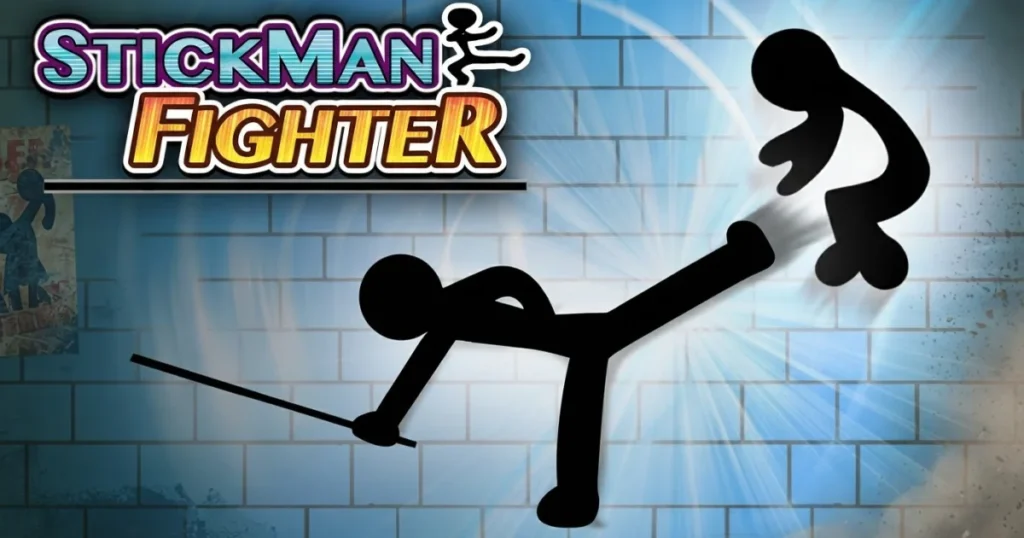









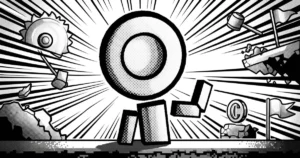



Stickman Fighter delivers intense rhythmic combat where perfect timing separates victory from defeat. This physics-based fighting game drops you into arena battles where every punch, kick, and weapon strike requires precise execution. Released in November 2023 by Playtouch, the game challenges you to master combo chains while unlocking an arsenal of sharp weapons to survive wave after wave of opponents.
Table of Contents+
Core Gameplay Mechanics
Understanding the Physics-Based Combat System
The combat system in Stickman Fighter revolves around physics-driven reactions that make every hit feel weighty and impactful. Your stickman fighter moves with realistic momentum, meaning attacks carry force that can send enemies flying across the arena. Timing your strikes to land during enemy vulnerability windows creates openings for devastating follow-up attacks. The physics engine calculates collision angles and impact force, so positioning yourself correctly before launching an attack determines whether you land a glancing blow or a knockout punch. Each weapon interacts differently with the physics system, from heavy axes that require wind-up time to quick daggers that allow rapid successive strikes.
Combat flows in a rhythmic pattern where you must read enemy attack telegraphs and respond with perfectly timed counters. The game rewards players who develop muscle memory for attack sequences, turning chaotic brawls into calculated exchanges. Environmental hazards like platform edges add another layer to the physics system, letting you knock opponents off ledges for instant eliminations. Mastering the weight and momentum of your fighter transforms you from a button-masher into a tactical combatant who controls the pace of every encounter.
Objective-Based Level Progression and Goals
Each level in Stickman Fighter presents clear objectives that drive progression through increasingly difficult arenas. Early stages focus on defeating a set number of enemies within time limits, teaching you fundamental combat mechanics while building confidence. As you advance, objectives become more complex, requiring you to protect specific zones, survive endless waves, or eliminate high-value targets surrounded by bodyguards. The game tracks your performance through star ratings based on completion time, damage taken, and combo efficiency, encouraging replay to achieve perfect scores.
Level design introduces new enemy types and environmental challenges that force you to adapt your strategies. Some arenas feature multiple platforms where enemies spawn from different heights, demanding constant awareness of your surroundings. Others restrict movement space, creating pressure-cooker situations where evasion becomes as important as offense. Completing objectives unlocks new weapons and upgrades that expand your combat options, creating a satisfying loop of challenge and reward. The difficulty curve maintains steady pressure without overwhelming new players, while veteran fighters find depth in optimizing their approach to each unique scenario.
Checkpoint Flags and Strategic Respawns
Checkpoint flags serve as critical strategic markers throughout longer battle sequences in Stickman Fighter. When you reach a checkpoint, the game saves your progress within that level, allowing you to respawn at that location if defeated rather than restarting from the beginning. These flags typically appear after particularly challenging combat sections or before major boss encounters, giving you breathing room to prepare for what comes next. Learning checkpoint locations helps you plan aggressive strategies, knowing you have a safety net if your risky approach fails.
Strategic use of checkpoints involves balancing risk and reward during combat. Rushing to reach the next checkpoint might leave you vulnerable to ambushes, while playing too cautiously can waste time and resources. Smart players use the moments after reaching checkpoints to assess their remaining health, available weapons, and upcoming threats before committing to the next section. The respawn system maintains momentum by placing you back in action quickly, keeping frustration low while still punishing careless play. This design encourages experimentation with different combat approaches since you can test aggressive tactics without losing significant progress.
Mastering Movement and Controls
Default Keyboard Layouts (WASD, Arrow Keys)
Stickman Fighter offers flexible keyboard control schemes that accommodate different player preferences. The default setup uses the left arrow key or A key to execute attacks, creating a simple one-button combat system that emphasizes timing over complex input combinations. Arrow keys handle movement and steering, letting you position your fighter precisely during heated exchanges. This streamlined approach keeps your focus on reading enemy patterns and landing hits rather than memorizing elaborate button sequences.
The keyboard layout proves particularly effective for quick reaction gameplay where split-second decisions determine outcomes. Dedicated movement keys separate from attack inputs prevent accidental actions during intense moments, giving you reliable control when precision matters most. Players can develop consistent muscle memory quickly since the control scheme remains constant across all levels and situations. The simplicity of the keyboard setup makes Stickman Fighter accessible to newcomers while providing the responsiveness experienced players demand for executing advanced techniques.
Intuitive Touch Controls for Mobile Devices
Mobile versions of Stickman Fighter translate the combat experience to touchscreens through carefully designed virtual controls. Tap-based inputs replace keyboard presses, with on-screen buttons positioned for comfortable thumb access during extended play sessions. The touch interface maintains the game’s emphasis on timing, requiring you to tap attack buttons at precise moments to land effective strikes. Drag gestures handle movement, letting you guide your fighter across the arena with smooth directional control.
The mobile control scheme adapts to different screen sizes and orientations, ensuring consistent performance whether you play on a phone or tablet. Visual feedback confirms each input, preventing the disconnected feeling that sometimes plagues touchscreen games. The simplified control layout works particularly well on mobile, where complex button combinations would create frustration. Touch controls preserve the core gameplay loop while making Stickman Fighter fully playable during commutes or quick gaming breaks.
Controller Support and Customizable Rebinding Options
For players who prefer gamepad input, Stickman Fighter includes controller support that maps combat actions to familiar button layouts. Standard controllers work seamlessly, with attack functions assigned to face buttons and movement handled by the analog stick or d-pad. This option appeals to players who grew up with console fighting games and want that tactile feedback during combat. Controller support maintains the same responsive timing as keyboard controls, ensuring no competitive disadvantage regardless of input method.
Customizable rebinding options let you tailor the control scheme to match your personal preferences and physical comfort. If you prefer attack mapped to a shoulder button instead of a face button, the game accommodates that choice. Rebinding proves especially valuable for accessibility, allowing players with different physical needs to configure controls that work for their situation. The flexibility extends to keyboard layouts as well, so left-handed players or those with non-standard keyboard setups can optimize their experience. These options demonstrate thoughtful design that prioritizes player comfort alongside gameplay challenge.
Precise Running, Jumping, and Wall Jumping Timing
Movement mechanics in Stickman Fighter demand precise timing to navigate arenas effectively and maintain combat advantage. Running builds momentum that affects both your attack power and evasion capabilities, with faster movement creating stronger strikes but reducing your ability to change direction quickly. Jumping serves both offensive and defensive purposes, letting you leap over low attacks while positioning yourself for aerial strikes. The jump arc follows realistic physics, requiring you to commit to the trajectory once airborne, which adds weight to the decision of when to leave the ground.
Wall jumping introduces vertical mobility that opens up advanced movement strategies. When you contact a wall surface during a jump, a brief window appears where you can input another jump command to bounce off in the opposite direction. Mastering this technique lets you reach elevated platforms, escape corner traps, and approach enemies from unexpected angles. The timing window for wall jumps is tight enough to require practice but generous enough to feel fair once you develop the rhythm. Combining running, jumping, and wall jumping creates fluid movement chains that separate skilled players from beginners, adding depth to what initially appears as straightforward combat.
Swimming Mechanics and Underwater Navigation
Certain arena environments in Stickman Fighter feature water sections that introduce swimming mechanics and underwater combat scenarios. When your fighter enters water, movement slows significantly, creating a different pace of engagement where deliberate actions replace rapid exchanges. Swimming uses the same directional inputs as ground movement but with altered physics that account for water resistance. You can still attack while submerged, though weapon effectiveness changes based on whether the weapon functions well underwater.
Underwater navigation requires managing your fighter’s oxygen supply, visible through a meter that depletes while submerged. Running out of air forces you to surface or risk taking damage, adding urgency to underwater objectives. Some levels hide powerful weapons or bonus items in submerged areas, rewarding players who explore beneath the surface despite the risks. The swimming mechanics create tactical variety, forcing you to adapt your combat approach when water enters the equation. Smart players use water sections strategically, luring enemies into the depths where their movement disadvantage becomes your advantage.
Combat Strategies and Weaponry
Effective Melee Attacks and Combo Chains
Melee combat in Stickman Fighter centers on building combo chains that multiply your damage output and keep enemies staggered. Each successful hit opens a brief window where you can land another attack before the enemy recovers, creating opportunities for two-hit, three-hit, or longer sequences. The key to effective combos lies in recognizing when enemies enter their recovery animation and timing your next strike to land just as they become vulnerable again. Breaking through enemy defenses requires mixing up your attack timing rather than mashing buttons, since predictable patterns allow opponents to counter.
Different melee weapons enable different combo styles. Light weapons like daggers allow rapid successive hits that build long chains, while heavy weapons like hammers deliver fewer but more powerful strikes that can break through enemy blocks. Positioning plays a crucial role in melee effectiveness, as attacking from behind or above deals bonus damage and extends combo windows. Advanced players learn to read enemy movement patterns, predicting where opponents will be rather than where they are, allowing preemptive strikes that start combos before enemies can react. Mastering melee combat transforms chaotic brawls into controlled demolitions where you dictate the flow of battle.
Ranged Weapons, Aiming Mechanics, and Projectile Trajectories
Ranged weapons add tactical depth to Stickman Fighter by letting you engage enemies from safe distances. Bows, throwing knives, and other projectile weapons require manual aiming using mouse controls or analog stick input, with crosshairs indicating your current aim point. Projectiles follow realistic trajectories affected by gravity and distance, meaning you must lead moving targets and account for arrow drop over long ranges. This aiming system rewards precision and prediction, as enemies rarely stand still long enough for easy shots.
Understanding projectile physics becomes essential for maximizing ranged weapon effectiveness. Arrows fired at upward angles travel farther but take longer to reach targets, while flat trajectories deliver faster hits with shorter range. Environmental factors like wind or platform height affect projectile paths, adding variables you must calculate during combat. Ranged weapons excel at softening up enemies before they close distance, picking off isolated targets, and controlling space by forcing enemies to dodge rather than advance. The limited ammunition for most ranged weapons creates resource management decisions, as wasting shots on missed attempts leaves you vulnerable when you need that final arrow to finish a tough opponent.
Picking Up and Throwing Environmental Objects and Weapons
The arena environment in Stickman Fighter contains interactive objects that become improvised weapons when picked up and thrown. Barrels, crates, rocks, and other debris scattered across levels can be grabbed and hurled at enemies for significant damage. Thrown objects follow physics-based trajectories, bouncing off surfaces and potentially hitting multiple enemies if positioned correctly. This mechanic encourages environmental awareness, as a well-placed barrel throw can eliminate several opponents simultaneously while conserving your equipped weapon’s durability.
Weapon drops from defeated enemies create another layer of tactical choice. When an enemy falls, their weapon remains on the ground for you to collect, letting you swap your current armament for something potentially more effective against upcoming threats. Picking up a fallen enemy’s sword mid-combat can turn the tide of battle, especially if your current weapon is nearly broken. The throw mechanic applies to equipped weapons as well, allowing you to hurl your sword at a distant enemy for a powerful ranged attack at the cost of disarming yourself. Smart players balance the immediate benefit of throwing weapons against the long-term need to maintain armed status, creating risk-reward calculations during every encounter.
Identifying the Best Weapons
Weapon selection in Stickman Fighter dramatically affects your combat effectiveness, with each armament offering distinct advantages and limitations. Swords provide balanced performance with moderate damage, decent speed, and reliable range, making them excellent all-purpose choices for players still learning enemy patterns. Axes deliver devastating damage per hit and can break through enemy blocks, but their slow swing speed leaves you vulnerable if you miss. Spears offer superior reach that lets you strike enemies before they enter their attack range, though their narrow hit zone requires precise aim.
The best weapon for any situation depends on enemy types, arena layout, and your personal combat style. Against fast, aggressive enemies, quick weapons like daggers let you land hits during brief openings and maintain defensive mobility. Facing heavily armored opponents, heavy weapons become necessary to penetrate their defenses despite the slower attack speed. Arena size influences weapon choice as well, with ranged weapons dominating open spaces while short-range weapons excel in tight corridors where enemies cannot avoid close combat. Experimenting with different weapons across various scenarios helps you develop intuition for which armament suits each challenge, turning weapon selection from guesswork into strategic planning.
Where to Play Stickman Fighter
You can play Stickman Fighter free right now on Arcazi.com directly in your browser with no download required. Also available on the App Store for iOS. Also available on Google Play for Android.
More Epic Fighting Games You’ll Love
If the rhythmic combat and weapon variety in Stickman Fighter appeal to you, these other fighting games on Arcazi.com deliver similar thrills with their own unique twists:
- Karate Bros – Master martial arts techniques in this physics-based brawler where precise strikes and defensive positioning determine victory in one-on-one duels.
- Gang Fall Party – Navigate chaotic multiplayer arenas where pushing opponents off platforms combines party game chaos with competitive fighting mechanics.
- Tekken 3 – Experience the classic arcade fighter that defined 3D combat with its deep move lists, combo systems, and iconic character roster.
- Boxing Physics 2 – Control ragdoll boxers in physics-driven matches where timing and positioning matter more than button mashing.
- Tag Team Wrestling – Coordinate with your partner in tag team matches that blend wrestling moves with strategic character switching.
- Wrestle Bros – Compete in over-the-top wrestling battles featuring exaggerated physics and environmental destruction.
These games showcase the variety available in the Fighting category, each offering distinct combat systems and challenges.
For Parents
Stickman Fighter features stylized combat between minimalist stick figure characters engaged in weapon-based battles. The violence is presented in a cartoonish manner with no blood or graphic content, focusing instead on physics-based knockouts and arena combat. The game’s simple visual style and arcade action make it accessible for players who enjoy competitive fighting mechanics without realistic depictions of violence. Parents should be aware the core gameplay revolves around combat and defeating opponents using various weapons.
FAQs About Stickman Fighter
How to draw stickman fighting?
Start with basic stick figures using circles for heads and straight lines for bodies and limbs. Add action lines to show movement direction, then draw weapons as simple shapes in the hands. Position the figures in dynamic poses with bent limbs to convey motion and impact.
How to draw stickman fighting with powers?
Begin with your basic stickman fighting pose, then add energy effects around the hands or weapons using wavy lines or star bursts. Draw motion trails behind punches or kicks, and include impact symbols like lightning bolts or flame shapes to represent special abilities.
How to draw stickman fighting poses?
Focus on dynamic angles by tilting the body line and positioning limbs at different heights. Draw one leg bent and one extended for kicking poses, or show both arms in different positions for punching sequences. Use curved lines for the spine to create more natural action poses.
How to draw stickman fighting with powers step by step?
First sketch the basic stick figure in an action pose. Second, add the weapon or fighting stance. Third, draw power effects like glowing auras or energy trails. Fourth, add impact lines and motion blur. Finally, darken the main lines and erase any guide marks.
How to download stick fighter?
Stickman Fighter is available on the App Store for iOS devices and Google Play for Android devices. Search for the game in your device’s app store, tap the download button, and install it directly to your phone or tablet.
How to make a stickman fight?
In Stickman Fighter, combat happens automatically when you approach enemies. Use the left arrow key or A key to execute attacks when enemies are within range. Time your strikes to land during enemy vulnerability windows and chain hits together for combo damage.
How to get all characters in stickman warriors?
While Stickman Fighter focuses on a single fighter with weapon unlocks rather than multiple characters, progression comes from completing levels and defeating enemies. Each victory earns you access to new weapons and upgrades that expand your combat capabilities.
Can you get stickman fight on xbox?
Stickman Fighter is currently available as a browser game and on mobile platforms through iOS and Android app stores. There is no official Xbox version of the game at this time.
How to draw a fireball in stickman fighter?
Draw a circular or oval shape for the fireball core, then add flame-like pointed shapes radiating outward from the center. Include motion lines trailing behind the fireball to show direction and speed. Add smaller spark details around the edges for extra impact.
What are the best weapons in Stickman Fighter?
Swords offer the best balance of speed and damage for most situations, while axes excel against armored enemies despite slower swing speed. Spears provide superior reach for keeping enemies at distance, and daggers allow rapid combo chains against fast opponents.
Does Stickman Fighter support two player mode?
Stickman Fighter is designed as a single player experience where you battle against AI-controlled enemies across multiple levels. The game focuses on solo progression through increasingly difficult arena challenges rather than local or online multiplayer.
How do I unlock new weapons in Stickman Fighter?
New weapons unlock as you progress through levels and defeat enemies. Completing objectives and achieving high star ratings on levels rewards you with access to more powerful armaments. Defeated enemies also drop weapons you can pick up and use immediately during combat.
Jump Into the Arena Now
Stickman Fighter is free to play right now on Arcazi.com with no download or installation required. Load the game in your browser and start mastering rhythmic combat, unlocking weapons, and surviving epic battles instantly.