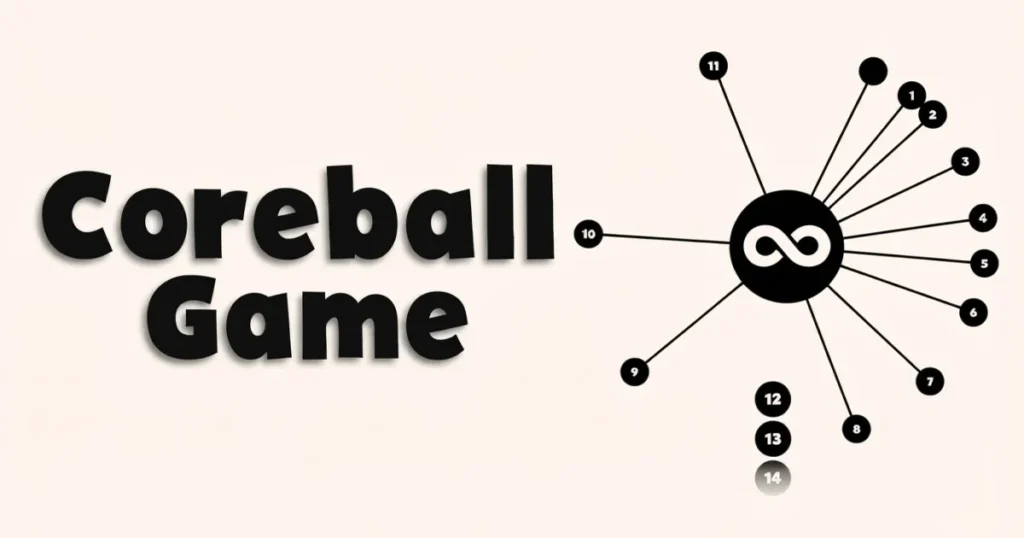



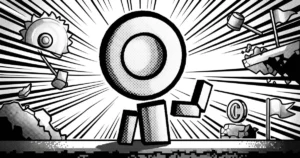

Coreball Game drops you into a minimalist arcade challenge where precision beats speed every time. Your job is to launch balls into a rotating core without colliding with the ones already attached, and every level ramps up the difficulty by adding more obstacles, faster spins, and tighter windows. Released in February 2020 by Sun Temple, this HTML5 skill game has grown into a 650+ level gauntlet that rewards patience, rhythm, and spatial awareness over button mashing.
Table of Contents+
- What Is Coreball Game?
- How to Play Coreball Game?
- Coreball Level Progression and Difficulty Scaling
- In-Game Power-Ups and Assistance Mechanics
- Advanced Strategies for High Scores and Speedruns
- Where to Play Coreball Game
- More Precision Arcade Challenges
- For Parents
- FAQs About Coreball Game
- Start Playing Coreball Game Now
What Is Coreball Game?
Coreball Game is a timing-based arcade challenge built around one core mechanic: attach your balls to a spinning central sphere without hitting any of the balls already stuck to it. Each level gives you a set number of balls to place, and you clear the stage by successfully attaching every single one. Miss your timing and collide with an existing ball, and you restart the level from scratch.
The game strips away unnecessary complexity and focuses entirely on reading rotation patterns, predicting gaps, and executing throws at the exact right moment. Levels start simple with slow rotations and plenty of space, but by the time you hit triple-digit stages, the core spins faster, obstacles multiply, and safe windows shrink to fractions of a second. Power-ups like Snails and Hearts appear occasionally to help you survive the toughest stages, but the real progression comes from learning enemy patterns and building muscle memory for split-second decisions.
How to Play Coreball Game?
Playing Coreball Game requires nothing more than a single input: click, tap, or press a key to throw a ball toward the rotating core. Timing is everything, because once you commit to a throw, the ball travels in a straight line and cannot be redirected. Watch the core’s rotation speed, identify the gaps between attached balls, and fire when the opening aligns with your trajectory.
Each level displays your remaining ball count at the top of the screen. Clear the level by attaching all balls without a single collision. Fail once and you restart the level immediately, but levels are short enough that retries never feel punishing. The game runs smoothly in Chrome, Edge, and Firefox without plugins or downloads.
Desktop Input and Keybindings
Desktop players can throw balls using the left mouse button, right mouse button, or spacebar. All three inputs perform the same action, so pick whichever feels most comfortable for your setup. Most players stick with left-click for speed, but spacebar works well if you prefer keeping your hand centered on the keyboard.
Arrow keys handle movement and steering in other modes, while the mouse controls aim and camera adjustments. Right-click serves as a secondary action in certain contexts, though the core throwing mechanic remains the primary focus across all 650+ levels.
Mobile Touch and Tap Controls
Mobile players use a virtual joystick for movement and tap anywhere on the screen to throw a ball. Touch controls are responsive and work identically to desktop inputs, with no delay between tap and throw. The game adapts to portrait and landscape orientations, though landscape provides a wider view of the rotating core and makes gap identification easier.
Tap-to-interact mechanics extend to power-up activation and menu navigation, keeping the entire experience playable with one thumb if needed. Screen size doesn’t impact difficulty, but larger displays make it easier to track fast rotations in later levels.
Coreball Level Progression and Difficulty Scaling
Coreball Game structures its 650+ levels into a steady difficulty curve that introduces new mechanics and rotation patterns every few stages. Early levels give you 10-15 balls to attach with slow, predictable spins and wide gaps. By level 50, rotation speeds double, obstacle counts increase, and safe windows shrink to half their original size.
The game never throws random difficulty spikes at you. Every increase in challenge is telegraphed through visual cues: faster core rotations, denser ball clusters, and shorter gaps between obstacles. Players who master the fundamentals in the first 100 levels will have the skills needed to tackle Elite Mode, where rotation speeds hit their peak and a single mistimed throw ends your run.
Analyzing Core Rotation and Obstacle Patterns
Core rotation patterns fall into three categories: constant speed, accelerating, and alternating direction. Constant-speed cores maintain the same rotation throughout the level, making them the easiest to predict. Accelerating cores start slow and gradually speed up as you attach more balls, forcing you to adjust your timing mid-level. Alternating cores reverse direction after a set interval, requiring you to track both clockwise and counterclockwise gaps simultaneously.
Obstacle density increases alongside rotation complexity. Early levels feature 3-5 attached balls with massive gaps between them, while late-game stages pack 15-20 balls onto the core with gaps barely wider than your projectile. Learning to read these patterns is the difference between clearing a level in 30 seconds or restarting it 20 times.
Level Milestones from Beginner to Elite Mode
Levels 1-100 serve as the tutorial phase, introducing core mechanics and basic rotation patterns without overwhelming new players. Levels 101-300 ramp up speed and density, forcing you to develop consistent timing and gap recognition. Levels 301-500 introduce alternating rotations and multi-phase cores that change behavior mid-level.
Elite Mode kicks in at level 501 and runs through level 650+, where rotation speeds max out and obstacle counts hit their peak. These stages demand frame-perfect timing and zero mistakes, with some levels requiring 30+ successful throws in a row to clear. Reaching Elite Mode proves you’ve mastered every mechanic the game has to offer.
In-Game Power-Ups and Assistance Mechanics
Coreball Game includes two power-ups that appear randomly during particularly difficult levels: Snails and Hearts. These aren’t purchasable or farmable, they show up automatically when the game detects you’ve failed a level multiple times in a row. Power-ups give you a temporary edge, but they never trivialize the challenge or replace the need for good timing.
Snails slow down core rotation for a limited duration, giving you more time to line up throws and identify safe gaps. Hearts grant a one-time collision shield, letting you survive a single mistake without restarting the level. Both power-ups expire after use, so save them for the tightest windows and fastest rotations rather than wasting them on easy throws.
Utilizing Snails and Hearts for Level Survival
Snails work best on accelerating cores, where rotation speed increases as you attach more balls. Activate the Snail early in the level to slow the core before it hits maximum speed, then attach as many balls as possible before the effect wears off. This strategy lets you clear 60-70% of the level during the slow phase, leaving only a handful of high-speed throws for the final stretch.
Hearts shine on levels with dense obstacle clusters and minimal gaps. Use the shield to attempt a risky throw through a tight window without fear of restarting. If you succeed, you’ve cleared the hardest part of the level. If you fail, the Heart absorbs the collision and lets you try again immediately. Never waste a Heart on an easy throw with a wide gap, save it for the one shot that’s been stopping your progress.
Advanced Strategies for High Scores and Speedruns
High-level Coreball Game play revolves around three advanced techniques: the Rhythm Method, Burst Throw, and Queue Management. These strategies separate casual players from speedrunners and leaderboard chasers, turning a simple timing game into a precision execution challenge.
The Rhythm Method involves syncing your throws to the core’s rotation cycle, treating each level like a musical beat. Instead of reacting to gaps as they appear, you predict when the next gap will align and throw preemptively. This cuts reaction time to zero and lets you chain throws together without pausing between shots.
The Rhythm Method and Burst Throw Techniques
Rhythm Method execution starts with counting the core’s rotation speed. Watch the core complete one full rotation and count the seconds it takes. Divide that time by the number of gaps to calculate the interval between safe throws. Once you’ve internalized the rhythm, you can throw on beat without consciously tracking the core’s position.
Burst Throw takes the Rhythm Method further by firing multiple balls in rapid succession during a single gap window. This only works on levels with wide gaps and slow rotations, but it cuts completion time in half when executed correctly. The trick is to throw the first ball as the gap opens, then immediately throw the second ball before the gap closes. Timing must be frame-perfect, because even a 0.1-second delay causes the second ball to collide with the first.
Queue Management and Spatial Awareness
Queue Management refers to the order in which you attach balls to the core. Instead of throwing randomly at whatever gap appears first, plan your throws to create evenly spaced clusters that maximize future gap sizes. Attach balls in a circular pattern around the core, leaving equal space between each one, rather than clustering them all on one side.
Spatial Awareness means tracking not just the current gap, but the position of every attached ball and how they’ll rotate into your trajectory. Advanced players visualize the core’s future state 2-3 rotations ahead, predicting where gaps will appear and pre-positioning their aim. This eliminates wasted time between throws and keeps your completion speed high even on dense obstacle levels.
Where to Play Coreball Game
Coreball Game is free to play right now on Arcazi.com, running directly in your browser with no download required. Also available on Google Play for Android. Also available on the App Store for iOS.
More Precision Arcade Challenges
- Tap Tap Shots – Tap to launch basketballs into hoops with perfect timing, chaining combos for higher scores across endless arcade rounds.
- Slope Rider 3D – Steer a ball down steep slopes at breakneck speed, dodging obstacles and collecting gems in a reflex-driven 3D runner.
- Color Rush – Match your ball’s color to incoming obstacles by timing switches perfectly, surviving as long as possible in this fast-paced color-matching arcade game.
- Chicken Jockey Clicker – Click to boost your chicken’s speed in this idle clicker where upgrades and automation drive your progress toward absurd velocity milestones.
- Super Liquid Soccer – Control physics-based soccer matches where timing and positioning matter more than button mashing, perfect for quick competitive rounds.
- King Of Fighters – Execute combos and special moves in this classic fighting game, mastering frame data and matchups across a roster of iconic characters.
These titles deliver the same skill-focused gameplay and instant replayability that define the best Arcade experiences.
For Parents
Coreball Game is a non-violent skill arcade game with no mature content, chat features, or in-game purchases. The minimalist design focuses entirely on timing and precision mechanics, making it appropriate for players of all ages. Sessions can last anywhere from 30 seconds to several minutes depending on level difficulty, and progress saves automatically between plays.
FAQs About Coreball Game
How do I play Coreball Game?
Click, tap, or press spacebar to throw balls at the rotating core. Attach all balls without hitting existing ones to clear each level.
Can I play Coreball Game on mobile?
Yes, the game works on mobile browsers with touch controls. Tap anywhere on the screen to throw balls, and the interface adapts to portrait or landscape mode.
What are Snails and Hearts in Coreball Game?
Snails slow down core rotation temporarily, while Hearts give you a one-time collision shield. Both appear automatically on difficult levels after multiple failed attempts.
How many levels are in Coreball Game?
The game includes over 650 levels, starting with beginner stages and scaling up to Elite Mode at level 501, where rotation speeds and obstacle density peak.
Does Coreball Game save my progress?
Yes, progress saves automatically in your browser. You can close the game and return later to continue from your last completed level.
What is the Rhythm Method in Coreball Game?
The Rhythm Method involves syncing your throws to the core’s rotation cycle, predicting gap timing instead of reacting. This eliminates delays and speeds up level completion.
Can I play Coreball Game offline?
No, the game requires an internet connection to load. Once loaded, it runs in your browser without additional downloads or plugins.
How do I beat fast rotation levels?
Watch the core complete one full rotation to learn its speed, then throw during the widest gaps. Use Snails to slow rotation if available, and avoid rushing throws.
Is there a two-player mode in Coreball Game?
No, Coreball Game is single-player only. You compete against the level design and your own high scores rather than other players.
What is Burst Throw technique?
Burst Throw means firing multiple balls in rapid succession through a single wide gap. It requires frame-perfect timing but cuts level completion time in half when executed correctly.
Why do I keep failing the same level?
You’re likely throwing too early or too late. Watch the gap’s position relative to your aim point, and throw only when the gap is perfectly aligned with your trajectory.
Can I skip levels in Coreball Game?
No, levels must be completed in order. There’s no skip function, so you’ll need to clear each stage to unlock the next one and progress toward Elite Mode.
Start Playing Coreball Game Now
Coreball Game is free to play instantly on Arcazi.com, running directly in your browser with zero downloads. Master 650+ levels of precision timing and see how far your skills can take you.